




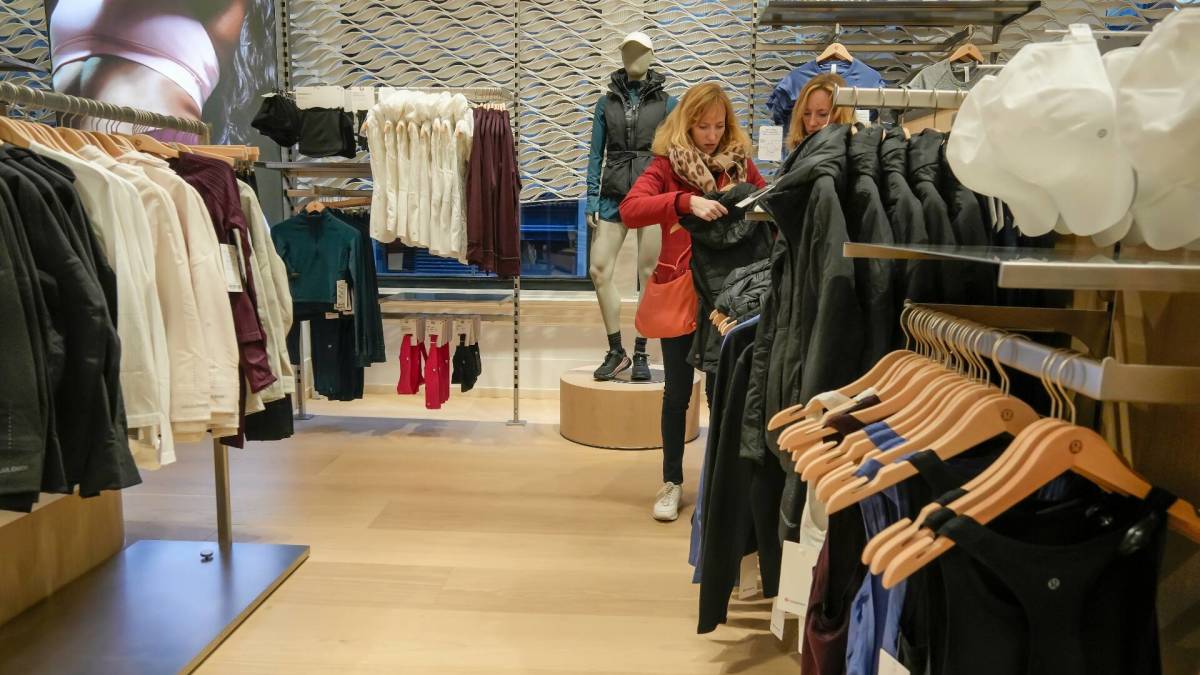

Lululemon, which is popular for its luxury athletic wear, recently suffered an embarrassing botch with the release of a new collection.
Earlier this month, Lululemon launched its new “Get Low” collection in the U.S., which features a line of seamless, sweat-wicking workout training gear such as leggings, shorts, and tank tops. Prices for pieces in the collection range from $68 to $108.
However, the new collection faced sharp criticism from customers after many flagged that the pieces were “see-through” and lacked stretch and compression.
“I 100% did not like the leggings. Completely see through, no compression, and weird color blocking. But the tank was so cute,” wrote one Lululemon customer on Reddit.
“I really liked the way they fit and was super excited but I tried the black ones on and they WERE extremely see through I could see my under wear when I bent over or did anything that involved stretching the fabric,” wrote another on Reddit.
“I bought these when they came out and sent them back. I’m a size 4 and bought the sea blue/true navy. Initially the first thing I noticed was how sheer the material was, this was before trying them on,” said another Reddit user.
In response to the feedback, Lululemon temporarily pulled the collection from its U.S. website last week to “better understand some initial guest feedback,” according to a statement the company sent to USA Today on Jan. 22.
“We expect to bring the collection back to our North America e-commerce channels soon, and the collection continues to be available in other markets,” said Lululemon in the statement.
In a LinkedIn post, Lululemon founder Chip Wilson said that the pause of the collection three days after its release was “a new low” for the company, especially after it faced similar issues with the launch of its “Breezethrough” leggings a few months ago.
“Pulling back the ‘Get Low’ product line after three days is clearly a total operational failure,” said Wilson. “This comes just 17 months after the failed launch of the ‘Breezethrough’ leggings, a product line also discontinued for similar product flaws. I’ve believed that lululemon has lost its cool for some time, but it is now evident to me that the Company has completely lost its way as a leader in technical apparel.”
He clarified that the mishap of the Get Low collection was “not the fault of any hard-working employees,” but of Lululemon’s board of directors.
“It is clear that persistent failures like this are born out of this Board’s lack of experience in creative businesses, disinterest in product development and quality, and focus on short-term, self-interested priorities,” said Chip.
Lululemon brings back Get Low collection, but there’s a catch
Days after temporarily removing the Get Low collection from its U.S. website, Lululemon has put it back online.
However, the re-release of the collection now comes with a stern warning to customers to purchase a size larger than they usually wear.
“To experience this tight’s best performance during your workout, we recommend sizing up,” said Lululemon on its website.
Related: Lululemon struggles to reverse concerning customer behavior
The company also recommends customers to “pair” leggings from the collection with “skin-tone, seamless underwear.”
“We take our guests’ feedback seriously and value their input in shaping the products and experiences we create,” said a Lululemon spokesperson in a statement to Retail Dive. “Last week, we temporarily paused online sales of our Get Low collection in North America to review early guest feedback and insights.”
“Based on the learnings, we have updated our product education information to incorporate new guidance on fit, sizing, and features to better support guest purchase decisions,” added the spokesperson.
Lululemon is struggling with declining sales
The move from Lululemon comes as it sees decreased consumer demand amid economic uncertainty.
In its latest earnings report, Lululemon revealed that its comparable sales in the Americas decreased by 5% year over year in the third quarter of 2025, while revenue in the region fell by 2%.
“In terms of the flow-through and what we’ve seen in the overall marketplace, we continue to see sort of pressure in the apparel space,” said McDonald during an earnings call last month. “We held share in premium athletic and lost some slight share in the performance apparel as we see guest behavior and trading down.”
The decrease in sales comes after Lululemon announced “modest price increases” on a small portion of its product assortment due to tariffs, a change that will continue to roll out over the next few months.
This is a risky move, since many U.S. consumers have been cutting back on spending as they grow concerned about tariffs causing price hikes on everyday goods and services, according to a recent survey from Wunderkind.
How U.S. consumers are responding to economic uncertainty:
- Amid tariffs and inflation, 59% of consumers feel cautious, pessimistic, or panicked about the economy.
- Approximately 71% cited higher prices as their top concern, while 47% cited unpredictable price increases.
- Also, 38% are seeking deals more often, while 34% are spending less overall.
Source: Wunderkind
“U.S. shoppers are proving more strategic than ever,” wrote Danny O’Reilly, senior content architect at Wunderkind, in a blog post. “What began as short-term caution has now crystallized into a new retail reality: value is the priority, trust is the differentiator, and digital fluency defines how, and where consumers spend.”
Lululemon is also facing heightened competition from growing rivals such as Alo Yoga and Vuori, which have been gaining market share.
Last year, Nike also announced a new partnership with Skims, a shapewear brand founded by billionaire socialite Kim Kardashian. The deal introduced seven new NikeSkims activewear collections, which launched in September.
To help keep customers away from rivals, Lululemon will focus on bringing product newness and innovation to several clothing categories in its stores, while increasing new-style penetration to 35% and scaling back its overall product assortment.
More Retail:
- Lowe’s rolls out free offers for customers amid challenges
- Lululemon struggles to reverse concerning customer behavior
- Kroger adds generous offer for customers as grocery prices rise
“From a product innovation perspective, our process always begins with research, really focusing on solving for the unmet needs,” said Lululemon Chief Financial Officer Meghan Frank during the company’s earnings call last month.
“And I believe the pipeline has a lot of those solutions, both across our activity as we continue to put our performance activity categories initiatives first across run, train, yoga, golf and tennis,” she added. “You’ll see a lot of innovation across all five of those activities.”
It is vital for Lululemon to focus on newness and innovation to win back customers. More Americans have been turning to thrift shopping for their apparel to save money, according to a recent survey from Talker Research, commissioned by Mercari.
Why Americans are choosing to thrift shop:
- Approximately 66% of Americans regularly thrift shop to balance their budgets.
- Nearly 1 in 6 are even thrifting once per week.
- Also, 71% of Americans are purchasing secondhand clothing, the most popular category in thrift shopping.
- Specifically, 51% say they shop at thrift stores because they enjoy the thrill of finding a good deal, while 42% likesearching for unique, one-of-a-kind items, and 28% are on the lookout for collectibles.
Source: Talker Research
“It’s not unusual to walk away from thrifting with a killer deal,” said Jeff LeBeau, vice president of growth at Mercari, in a statement.
“That’s part of the joy of thrifting — searching for and finding something that’s perfect for you, at a price you can afford. And with the rise of online thrifting, American consumers now have more opportunities than ever to discover incredible bargains.”