





Political attacks undermine Fed independence, weaken dollar, stall policy, fuel safe-haven flows as investors flee volatility into gold and euro.
The Erosion of Federal Reserve Independence
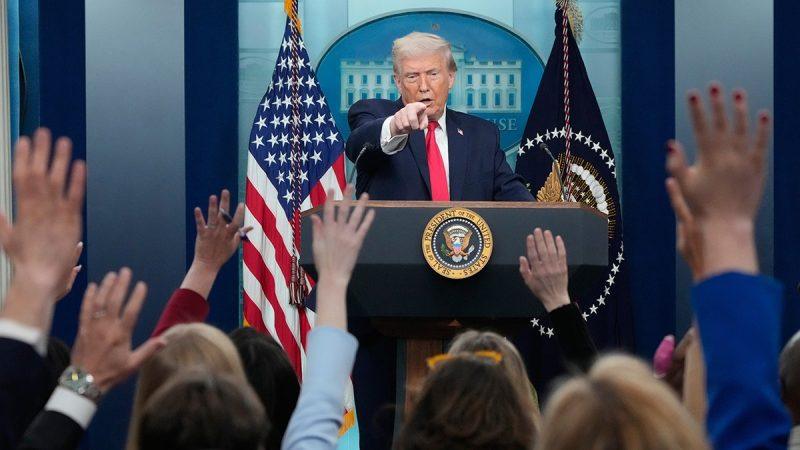
The most striking development in the current financial landscape is the unprecedented assault on the autonomy of the U.S. Federal Reserve. Market stability is being rocked by President Trump’s public campaign to undermine the central bank’s independence, ranging from repeated verbal attacks to the pursuit of a criminal investigation into Chair Jerome Powell. This political interference has done more than just rattle nerves; it has fundamentally eroded the status of the Greenback as a premier reserve currency. As the administration signals a desire to replace current leadership with more compliant, “dovish” figures, investors are beginning to price in a future where monetary policy is dictated by political whim rather than economic necessity. This shift has sent the U.S. Dollar tumbling to levels not seen in years, as the “independence premium” that once protected the currency rapidly evaporates.
Monetary Policy Stagnation Amid “Wait-and-See”
Despite the surrounding political firestorm, the actual mechanics of monetary policy remain locked in a tense “wait-and-see” period. Central banks on both sides of the border—the Fed and the Bank of Canada—find themselves in a holding pattern, attempting to balance persistent inflation against softening economic indicators. With the Fed widely expected to maintain interest rates in the 3.5%–3.75% range and the BoC signalling that its 2.25% rate is “about right,” policymakers are treading a narrow path. This stagnation highlights a growing disconnect between the technical requirements of inflation control and the mounting political pressure to slash borrowing costs. For now, the “higher for longer” narrative persists, but the market’s focus has shifted away from the rate decisions themselves and toward the tone of the officials tasked with defending them.
Flight to Safe Havens and “Trump Trade” Volatility
The volatility sparked by a disruptive trade agenda and shifting geopolitical alliances has ignited a massive rotation into safe-haven assets. Gold has emerged as the ultimate beneficiary of this uncertainty, surging toward the $5,300 mark as investors flee a “crushed” U.S. Dollar. This rally is fueled by a potent mix of 100% tariff threats against Canada, lingering friction within NATO, and the lack of a resolution in the Russia-Ukraine conflict. As President Trump praises the depreciation of the Dollar and promotes a disruptive trade agenda, the traditional “Trump Trade” has evolved into a flight from currency risk altogether. The Euro’s climb to four-year highs and Gold’s relentless record-breaking streak serve as a clear signal: the market is currently prioritizing protection over speculation in the face of an increasingly unpredictable global policy environment.
Top upcoming economic events:
1. Wednesday: The Federal Reserve Interest Rate Decision
The U.S. Federal Reserve is scheduled to announce its interest rate decision at 19:00 GMT. Markets overwhelmingly expect the central bank to maintain the current policy rate in the range of 3.5%–3.75%. This event is the anchor for the week’s financial activity, as it dictates the cost of borrowing for the world’s largest economy.
2. Wednesday: Bank of Canada (BoC) Monetary Policy Announcement
The Bank of Canada is widely expected to hold its benchmark interest rate steady at 2.25%. This marks the second consecutive pause for the BoC. The decision is vital as it signals that Canadian policymakers believe their current restrictions are sufficient to manage inflation, which recently edged up to 2.4%.
3. Tuesday: Trump’s Comments on U.S. Dollar Depreciation
President Donald Trump voiced approval for the recent decline in the U.S. Dollar, stating it should “seek its own level.” These remarks are significant because they break from traditional “strong dollar” policies, fueling a global sell-off of the Greenback and contributing to its fall to a four-year low.
4. Wednesday: Gold Reaches Unprecedented Record Highs
Gold (XAU/USD) surged into uncharted territory, touching a fresh all-time high near $5,311 (later stabilizing near $4,260 according to varying report segments). This event highlights extreme market anxiety; investors are fleeing to “safe-haven” assets due to fears over U.S. trade policy and the erosion of the dollar’s status.
5. Ongoing: Political Pressure on Fed Independence
The reports detail an “unprecedented” level of political pressure on the Federal Reserve, including criminal investigations into the chair and plans to replace Jerome Powell with a more dovish successor. This is critical because the Fed’s independence is a cornerstone of global financial stability; any perceived loss of autonomy devalues the U.S. Dollar.
6. Friday (Prior): U.S. and Japan Conduct “Rate Checks”
News emerged of the Fed and the Bank of Japan conducting “rate checks,” which served as a severe warning of potential coordinated intervention to support the Yen. This event is important because it forced speculative investors to abandon “long” positions on the USD/JPY pair, shifting global currency dynamics.
7. Tuesday: Announcement of Upcoming Fed Chair Nomination
President Trump signaled he would soon announce his pick for the next head of the Federal Reserve, predicting that interest rates would “come down a lot” under new leadership. This is a high-impact event for markets as it suggests a looming shift toward a “dovish” (lower rate) monetary environment in 2026.
8. Saturday: Collapse of Ukraine-Russia Peace Talks
Trilateral peace talks in Abu Dhabi ended without a deal after Ukraine rejected Russia’s demand to cede the Donbas region. This failure ensures the continuation of the nearly four-year war, maintaining high geopolitical risk premiums that keep commodity prices, like gold and oil, volatile.
9. Weekly: U.S.-NATO Friction Over Greenland
A short-lived but intense diplomatic friction occurred over President Trump’s aim to acquire Greenland, raising doubts about the internal trust within the NATO alliance. This event is significant as it adds a layer of Western geopolitical instability, further driving investors toward safe-haven assets.
10. Ongoing: U.S.-Canada Trade and Tariff Threats
Trump threatened a 100% tariff on Canadian goods, accusing the country of being a gateway for Chinese products. This development is crucial for North American trade relations, as it reignites trade-war fears and complicates the Bank of Canada’s efforts to manage a “soft landing” for its economy.
The subject matter and the content of this article are solely the views of the author. FinanceFeeds does not bear any legal responsibility for the content of this article and they do not reflect the viewpoint of FinanceFeeds or its editorial staff.
The information does not constitute advice or a recommendation on any course of action and does not take into account your personal circumstances, financial situation, or individual needs. We strongly recommend you seek independent professional advice or conduct your own independent research before acting upon any information contained in this article.