





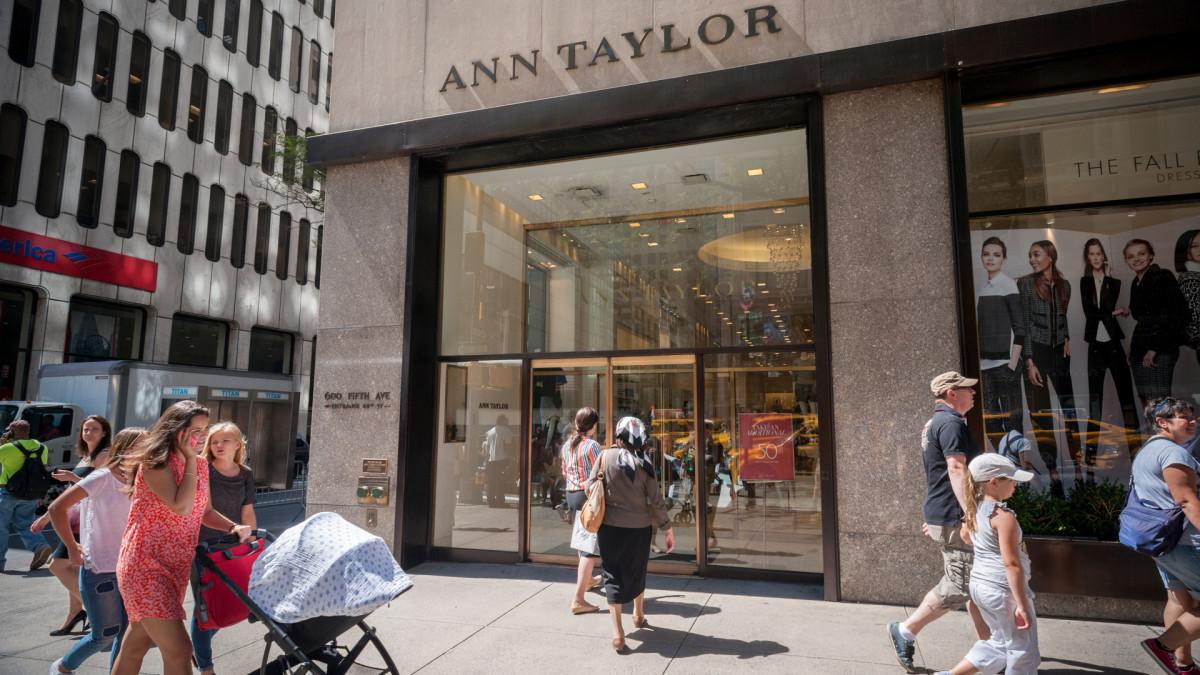

For decades, one company defined what it meant to “dress for success,” setting the standard for professional attire and becoming a go-to uniform for women entering corporate America during a period of rapid workforce expansion.
But the same brand that once defined reliability in women’s fashion is now navigating a very different reality marked by store closures, shifting consumer behavior, and an industry undergoing rapid transformation.
Known for its power suits and tailored trousers, Ann Taylor is a women’s apparel brand founded in 1954 that quickly became the signature professional style. As more women entered the corporate workforce in the 1970s and 1980s, the brand surged in popularity and rapidly expanded into a national retail presence.
Ann Taylor went public in 1991 and launched its sister brand, LOFT, five years later to reach a broader, more casual segment of the market.
Despite its strong legacy, the company has not been immune to mounting pressures across the retail sector. Macroeconomic uncertainty, increasingly value-conscious consumers, and intensifying competition from both online and legacy brands have all contributed to ongoing challenges.
Ann Taylor continues store closures in 2026
Ann Taylor’s parent company, KnitWell Group, has recently closed multiple stores nationwide across several of its brands, signaling a continued shift toward optimizing its physical retail footprint.
2026 store closures
- LOFT: Closed a store in January 2026 in Durham, North Carolina, and another in March 2026 in Whitehall Township, Pennsylvania, according to The News & Observer and Lehigh Valley Live.
- Ann Taylor: Closed a store in January 2026 in Naples, Florida, according to Gulfshore Business.
- Chico’s: Closed a store in January 2026 in Overland Park, Kansas, according to The Star
- Talbots: Closed a store in March 2026 in Short Pump, Virginia, according to WTVR
While the company has not publicly disclosed detailed reasons for most of the closures, at least one LOFT location was confirmed to have shut down due to a decision not to renew its lease, highlighting the key role real estate continues to play in retail restructuring.
The pattern of selective closures points to a strategy focused on profitability per location rather than overall store count, a shift that has become increasingly common across the industry.
Ann Taylor’s turbulent history and restructuring
Ann Taylor’s history shows how quickly even established brands can be disrupted in today’s retail environment.
In 2015, Ann Taylor and LOFT were acquired by Ascena Retail Group for $2.16 billion. Just five years later, Ascena filed for Chapter 11 bankruptcy protection in 2020 after continuous declines in sales and foot traffic, issues that were significantly worsened by the COVID-19 pandemic.
The restructuring led to the closure of more than 1,000 stores, according to Business Insider.
Later that year, Sycamore Partners (then operating as Premium Apparel LLC) acquired Ann Taylor, LOFT, and other brands for $540 million, according to a company announcement.
In 2023, the firm consolidated its portfolio under the KnitWell Group, which manages Ann Taylor, LOFT, and Talbots. At the time, the group generated more than $3 billion in annual sales, according to a company announcement.
Today, KnitWell Group operates 3,000 stores across a portfolio of multiple womenswear brands, including Ann Taylor, LOFT, Talbots, Chico’s, Haven Well Within, Lane Bryant, Soma, and WHBM.
The move to transition the brands into a privately held portfolio under a retail operator was aimed at prioritizing efficiency, margins, and long-term viability over rapid expansion.
A broader retail industry shift affects Ann Taylor
The challenges facing Ann Taylor are far from isolated. The entire retail sector is undergoing a structural transformation.
According to CoreSight Research, retailers announced 67% more store closures in 2025 compared to the previous year, an acceleration reflecting changing consumer behavior and ongoing economic pressure.
Coverage on more retail store closures:
- 67-year-old retailer quietly closes stores in major shift
- 79-year-old fast-fashion leader closing more stores
- 125-year-old retail chain to close more stores in 2026
- 48-year-old nostalgic mall retailer will close 25 stores in 2026
And the volatility of the broader retail sector is expected to continue. McKinsey & Company’s State of Fashion 2026 Report projects low-single-digit growth for the global fashion industry, citing ongoing macroeconomic instability, tariff pressures, and value-conscious consumer behavior, particularly in the U.S.
At the same time, e-commerce continues to gain share rapidly. U.S. online spending reached $1.34 trillion in 2024 and is projected to surpass $2.5 trillion in 2030, according to Capital One Shopping‘s Online Shopping Statistics 2026 data.
U.S. online sales accounted for 22.3% of global e-commerce spending in 2024, up nearly 1.5% from the year prior.
Yet physical retail is still the preferred format for most consumers. Brick-and-mortar stores accounted for approximately $14.4 trillion of total retail sales of $18.9 trillion in 2025, significantly outpacing e-commerce, according to Euromonitor research gathered by EY.
This contrast shows that stores remain essential but must evolve to justify their existence.
The future of retail
One of the industry’s most pressing challenges is the decline in the quality of the in-store customer experience.
According to Forrester, many retailers have struggled to adapt their physical environments to meet rising consumer expectations, particularly as shoppers grow accustomed to the convenience and personalization of online channels.
Experts suggest that retailers must rethink their strategies to remain competitive.
Sharmila C. Chatterjee, a marketing lecturer at MIT Sloan School of Management, emphasizes the importance of combining operational efficiency with customer-centric innovation.
This includes optimizing merchandise assortment, leveraging artificial intelligence and data analytics, reducing wait times, improving return policies, and investing in store design.
“The future of retail is a hybrid of online and offline channels,” said Chatterjee in a study. “To keep customers coming back, retailers need to make strategic investments, experiment with new approaches, and, inevitably, engage in some trial and error as they figure it out.”
For Ann Taylor and its parent company, the path forward will likely depend on how effectively it balances these investments while continuing to streamline operations. This approach will determine whether legacy brands like Ann Taylor can remain relevant in a rapidly evolving retail landscape.
Related: 77-year-old jewelry giant will close 100 stores, shut 2 brands