



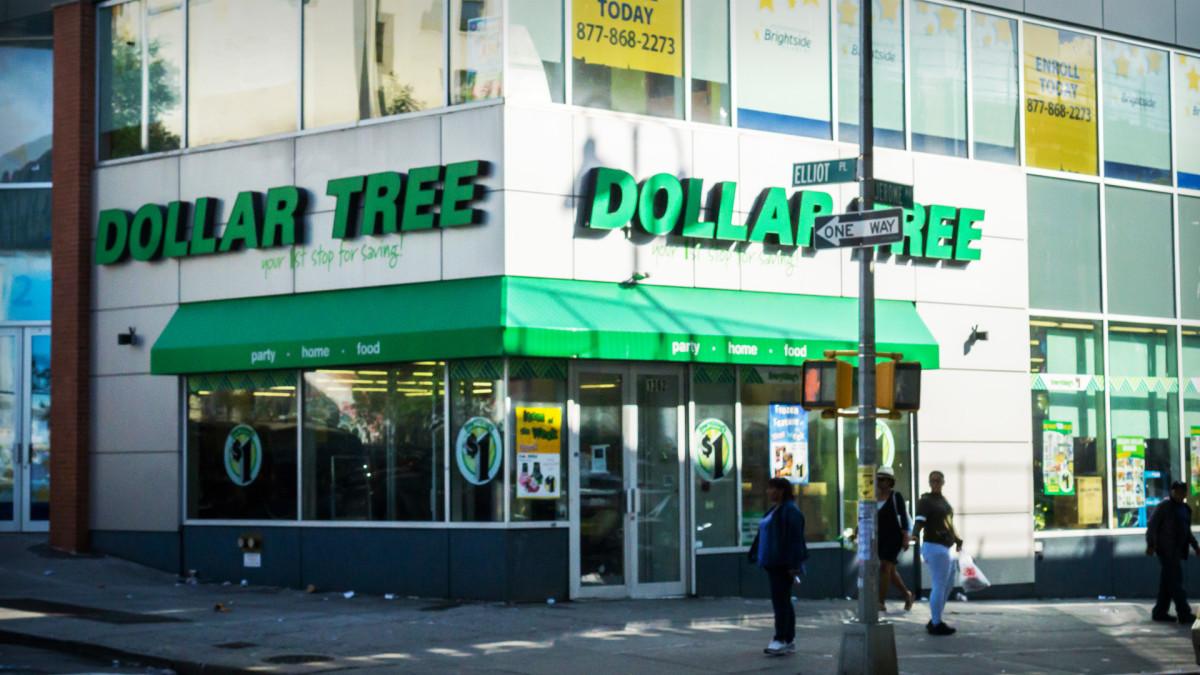

Dollar Tree, the discount retailer that has been a go-to for people, especially for themed decorations, has been working vigorously to bring customers back to the store.
Some of the restructuring has involved introducing more price variations for bundled items and revamping how products are placed in the store.
Last year, Dollar Tree sold its Family Dollar banner to private equity firms Brigade Capital Management and Macellum Capital Management for $1 billion, a big drop from the $8.5 billion it paid in 2015 for its acquisition.
Ever since, Dollar Tree has been working hard to reposition itself as a crowd favorite for deals and discounts and to double down on providing “value, convenience, and discovery” to its customers, as Dollar Tree CEO Mike Creedon noted.
In its latest efforts to win back customers, the company is expanding its distribution network and upgrading inventory systems, part of a broader effort to streamline operations and ensure that shelves are always stocked with what the shoppers want.
Dollar Tree makes major supply chain overhaul
Dollar Tree has been modernizing its distribution network to better manage inventory and support its growing product assortment.
Executives pointed out that investments in improving product availability and store standards are part of enhancing the overall customer experience, consequently driving in-store footprint.
This includes rebuilding the Oklahoma distribution center, which will serve 700 stores and is expected to be operational by 2027.
More Retail:
- Walmart fires OpenAI in playbook-changing move
- Costco CEO just gave members a new reason to renew
- Bath & Body Works makes big change customers will notice right away
Dollar Tree’s Arizona distribution center will open in 2026 and will serve stores in Utah, Nevada, Colorado, and New Mexico.
Additionally, the discount retailer purchased a 1.25 million-square-foot distribution center near Phoenix in 2025, according to Retail Dive.
These new distribution centers will be pivotal in improving store experiences by ensuring that products are found on the shelf on time, especially around holidays.
Dollar Tree will also open 400 new stores while targeting 75 closings.
Shutterstock
Dollar Tree traffic remains a challenge
While the operational investments are in place, the company’s next step is to retain customers in-store, a key challenge for the retailer.
Dollar Tree’s recent Q4 and full-year 2025 earnings report, announced on March 16, showed that store traffic had declined in the past quarter, even as the company reported modest sales growth.
Bernstein analyst Zhihan Ma said that while the retailer delivered a small Q4 beat, it warned that traffic trends will be an important factor to watch in the coming year. Noting that the real test will come in Q2 when Dollar Tree starts to “lap last year’s macro tailwinds.” Bernstein increased the price target to $124 from $123, keeping a Market Perform rating.
Morgan Stanley echoed a similar sentiment, saying that “traffic remains a work in progress.”
Jeffereis analysts are skeptical of a durable traffic increase, while noting that multi-price benefits might be short-lived. But overall, increased the price target to $80 from $75, keeping an Underperform rating.
Meanwhile, analysts at Truist are optimistic that as the company continues to improve store standards, optimize inventory, and increase product value, the retailer’s performance will also improve, as reported by TheFly.
Dollar Tree optimistic about advancements
Michael Creedon, CEO & Director of Dollar Tree see the decline in traffic in line with expectations. Creedon noted at the company earnings call that “modernizing pricing” and “strengthening execution” were needed to work its resticker process.
The company has taken substantial steps to introduce new signage, improve price clarity, and, essentially, implement a system-wide reset to modernize the customer shopping experience.
And this temporary shift in store traffic and spending per visit was thus expected, given already-improving traffic in Q4.
In terms of technology, Dollar Tree has replaced its decades-old systems with cloud-based platforms, mobile-enabled workflows, and predictive analytics. This is expected to deliver the desired technological uplift needed for enhanced customer experience.
The company generated $1.2 billion in cash, invested $264 million in capital expenditures, and reported $970 million in free cash flow for the quarter and over $1 billion for the full year.
Related: Shoe brand once worth $4B closes all stores, avoids bankruptcy