





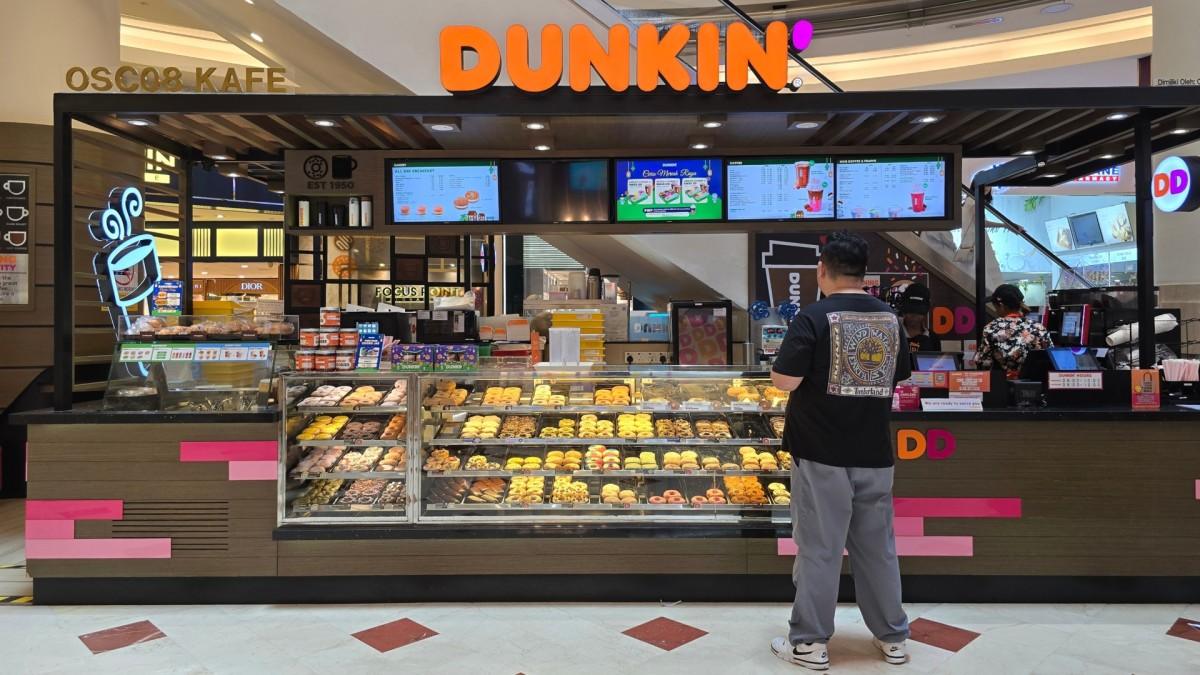

A brand’s dominance in one market can create the illusion of universal appeal. In practice, consumer resonance is deeply local. What works for one country across pricing, positioning, product mix, and flavor profiles rarely transfers seamlessly to another.
That is what makes international expansion inherently risky. Consumer behavior, cultural expectations, economic realities, and competitive landscapes vary significantly by region. Even well-established companies can struggle if they underestimate these dynamics.
Success in a home market does not guarantee performance abroad.
That reality is now playing out for Dunkin’, despite being the largest coffee and donut brand in the U.S. The chain is now preparing to exit an entire market after 14 years.
Dunkin’ plans to exit India after 14 years
India-based food service company Jubilant FoodWorks has revealed it will not renew its Dunkin’ franchise agreement upon its expiration on Dec. 31, 2026. The company currently operates Dunkin’ locations in India and has led the brand’s expansion in the market.
Both parties are expected to evaluate next steps for existing stores, including a potential sale or transfer of franchise rights. According to company statements, the decision is not expected to materially impact Jubilant’s overall financial or operational performance.
U.S. leader Dunkin’ faces global expansion challenges
Founded in 1950 in Massachusetts, Dunkin’ grew rapidly through franchising after launching its first franchise location in 1955.
In 2020, Dunkin’ was acquired by Inspire Brands, which also owns Arby’s, Baskin-Robbins, Buffalo Wild Wings, Jimmy John’s, and Sonic. The brand now operates more than 14,000 restaurants across nearly 40 global markets, according to its website.
Despite this global scale, its performance has not been consistent across all regions.
Why Dunkin’ struggled in India
Jubilant FoodWorks launched Dunkin’ in India in April 2012, initially expanding to more than 70 stores within its first four years. However, the brand has failed to gain sustained traction and eventually scaled back operations.
In fiscal year 2025, Dunkin’ contributed just 0.61% of Jubilant’s total revenue and recorded a loss of approximately 191 million rupees (about $2.05 million), the company’s full fiscal year 2025 earnings report revealed.
By December 2025, the store count had declined to 27 Dunkin’ locations, down from earlier peaks, its third-quarter investor presentation noted.
Other American food franchises operated by Jubilant significantly outperformed Dunkin’, according to its fourth quarter earnings report for fiscal 2025.
- Domino’s: 2,304 stores across 475 cities, with 19% revenue growth year over year
- Popeyes: 63 stores across 23 cities, with stronger growth momentum
This performance gap led the company to prioritize higher-performing brands.
A deeper look at Dunkin’s challenges in India
Dunkin’s struggles in India highlight a product-market fit issue, rather than a simple execution failure.
- Category mismatch: India is traditionally a tea-dominant market, while Dunkin’ built its identity on coffee.
- Positioning gap: The brand leaned toward a more Westernized café experience with pricing above many local alternatives, according to Dunkin’s online menu.
- Localization limits: While some menu adaptations were introduced, they did not go far enough to compete with localized offerings from rivals.
Although Dunkin’ fell flat in the country, Domino’s succeeded in India by localizing its menu, pricing, and delivery model to align with local preferences and consumption habits, Domino’s online menu shows.
The real reason brands fail abroad
Industry experts consistently point to one core issue: positioning, not execution.
Brands often enter new markets assuming they already belong, while consumers are still deciding whether the brand has earned relevance and trust.
Research from McKinsey & Company reinforces this challenge, noting that around 70% of transformations fail. Key contributing factors include:
- Lack of organizational alignment
- Insufficient investment in capabilities
- Weak long-term strategy execution
Global brands often hesitate to localize out of fear of diluting their identity, Jessica Wong, CEO of marketing and PR firm Valux Digital, told Forbes.
“Global brands do not fail because they communicate locally,” Wong said. “They fail because they underestimate how deeply local trust systems shape perception, credibility, and long-term success.”
More coverage on international expansion:
- Chipotle fans skeptical of its latest restaurant move
- Taco Bell takes its Mexican menu somewhere unexpected
- Chick-fil-A to open its first global restaurants in 2025
- Nordstrom brings back fashion brand after 25-year U.S. shutdown
Analysts from Harvard Business Review support this view, noting that localization is no longer a surface-level adjustment. Companies need to adapt operations, supply chains, and partnerships at a structural level, even at the cost of efficiency, to compete effectively across markets.
Workplace fraud journalist Kris Paterson emphasizes that success at home doesn’t guarantee success abroad.
“One-size-fits-all doesn’t work in global business,” said Paterson. “Every market has unique tastes, habits, and competitors; ignoring them is a recipe for disaster.”
Other U.S. food chains that failed internationally
Dunkin’ is far from alone. Several major U.S. food brands have struggled to replicate domestic success overseas.
- Domino’s (Italy): Closed all Italian locations by 2022 due to intense local competition and limited product differentiation.
- Taco Bell (Mexico): Failed twice in 1994 and 2007, unable to compete with local vendors on authenticity, taste, and price.
- McDonald’s (Bolivia & Iceland): Closed in Bolivia in 2002 due to locals’ preference for traditional food, and in Iceland in 2009 due to high import costs following the financial crisis, which made operations unsustainable.
Key takeaway for brands looking to expand internationally
Global expansion is not about replicating a successful formula; it requires rebuilding that formula for each market.
Brands that succeed internationally don’t simply export their identity. They earn local relevance through deep adaptation. Those that fail often wrongly assume their reputation will carry over.
Dunkin’s exit from India underscores the broader lesson that in global markets, adaptation isn’t optional; it’s essential for long-term success.
Related: Starbucks brings back two viral drinks not seen in nearly a decade