




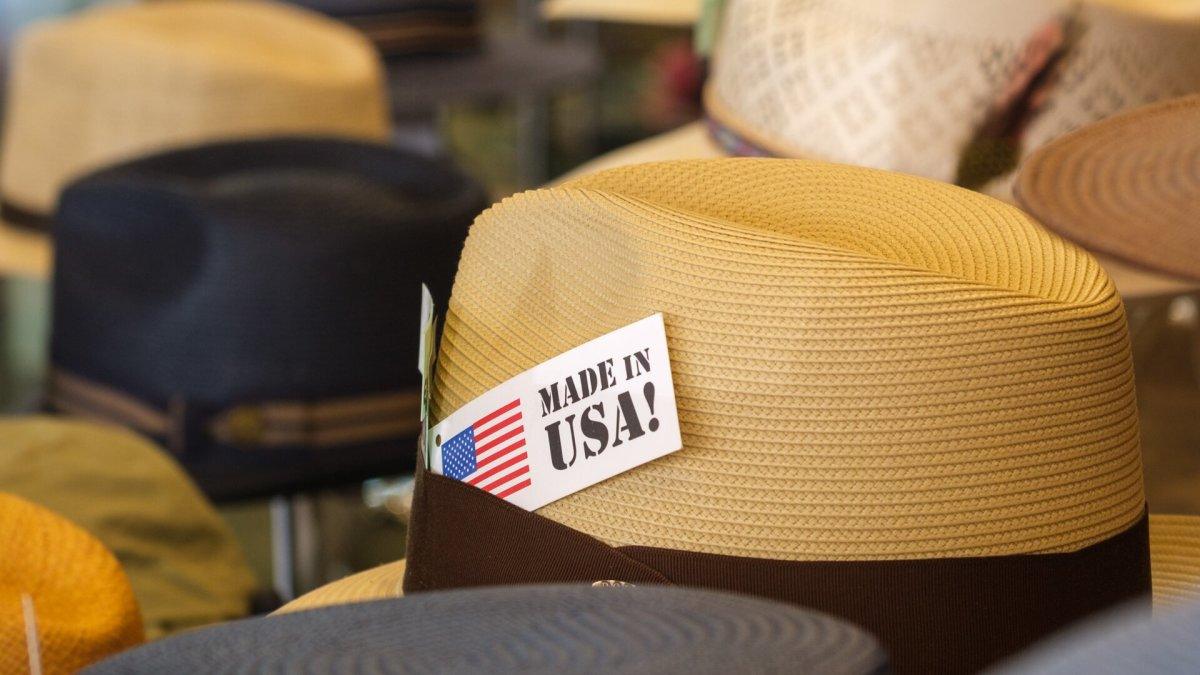

Americans say they want to support local businesses and buy made-in-America products, but they often aren’t willing to pay more for them. In reality, survey results vary greatly on the question of whether Americans will pay more for products made in the USA.
A review of several studies shows just how unclear the numbers are.
- 70% of Americans prefer products labeled “Made in USA,” and 83% say they would be willing to pay up to 20% more for those products, according to a survey conducted by the Reshoring Institute.
- One study found 70% of respondents said they would pay up to $10 more for U.S.‑made goods, with willingness dropping sharply above that level, a study from the Lany Group showed.
- Other polls reveal that price trumps “Made in USA” for many shoppers; 37% aren’t willing to pay any extra, 26% would pay up to 5% more, and 21% would pay up to 10% more, according to data from Ipsos.
- Recent trend data suggests preference for American‑made products has softened, with only about 50% of U.S. adults saying they’re more likely to buy again if a product is made in the USA. This is down from earlier levels, according to August 2025 data from The Conference Board, based on a survey of 3,000 U.S. adults.
“Made in America” store owner and founder Mark Andol believed in buying American and launched his brand in 2010 to highlight American-made products. Now, just a few months after his unexpected death in July, the company has been forced to close its final location.
Made in America was a store with a mission
Andol’s mission was to create and save American jobs by increasing manufacturing in the U.S.A.
“His passion rose out of the loss of a major contract to a competitor in China, forcing the closure of two of his four plants and the furlough of one-half of his workforce,” his company shared on its website.
The New York flagship location was later joined by a mall outpost, but that location was closed during the Covid pandemic.
Tourists have supported the brand.
“Since then, Made In America Store has welcomed more than 800 tour buses from as far as Texas, Minnesota, Florida, and Maine. General Welding & Fabricating, Inc. now employs more workers than it did a decade ago,” the company added.
The U.S. lost more than 4.5 million manufacturing jobs between 2000 and 2024, a roughly 26% decline even as overall private‑sector employment grew, highlighting challenges for companies trying to sell higher‑cost American‑made goods, according to U.S. Bureau of Labor Statistics data.
Shutterstock
Made in America is closing
The company shared its shutdown notice on its Facebook page.
“MadeInAmericaStore.com is closing — and this is your last chance to buy American online with us. Our website will officially shut down Thursday, January 29th, so we’re saying thank you with one final opportunity to save,” it posted.
The retailer is selling its building, but suggested it may reopen in the future.
“This isn’t goodbye — it’s a pause, a pivot, and a promise,” it shared. “After years of building something we’re incredibly proud of, the Made in America Store is entering a new chapter. While we’ve made the difficult decision to sell our current building, our name, mission, and commitment to American-made products are not going anywhere.”
More Retail:
- Costco sees major shift in member behavior
- Retail chain shuts all locations as legal changes hit industry
- Lululemon struggles to reverse concerning customer behavior
- T-Mobile launches free offer for customers after major loss
Local news station WIVB 4 reported on Andol’s passing in July and shared a statement from the company.
“Mark was a passionate advocate for American manufacturing, a dedicated community leader, and a tireless supporter of working families,” the business said. “His legacy lives on in the countless lives he touched, the jobs he helped create, and the spirit of pride and patriotism he inspired across the nation.”
Buying and selling American is a challenge
Earlier in my career, I sold American-made steel scaffolding for my family business, which cost roughly twice as much as the Chinese-made alternative.
Over time, I noticed a clear pattern: Customers who needed to prioritize quality, usually for safety reasons, returned repeatedly, while strictly budget-driven buyers opted for cheaper imports. This real-world experience closely mirrored national survey data on Americans’ willingness to pay more for Made-in-USA products.
The average contractor may have wanted to buy made-in-America products, but if they were bidding for jobs against people willing to use Chinese brands, they really had no choice.
“When people buy something, they are buying a bundle of benefits. The benefits can be functional and tangible — a hat to keep you warm or a washing machine to give you clean clothes — or intangible — a handbag for prestige or a car for reliability. These results show that the benefit we get from ‘American-made’ is outweighed by other tangible and intangible benefits for the majority of buyers,” according to Bentley University Marketing Professor Andy Aylesworth.
Related: Another major retail chain closes warehouse operations
Americans are split between price and country
A study conducted by Bentley and Gallup showed that “only 39% of Americans consistently consider where products are made when buying them.”
The struggling economy has also forced many Americans to focus on price and value, according to a new report from The Conference Board.
“As price concerns intensify, many U.S. consumers appear to associate ‘made in’ labels with elevated prices due to generally higher domestic production costs as well as tariffs on foreign-made goods. Increasingly, consumers prioritize value and affordability over emotional affinity for certain countries, including their own,” said Denise Dahlhoff, director of marketing & communications research at The Conference Board and author of the report.
The gap between Americans’ stated preference for Made-in-USA products and their actual purchases shows that price and perceived value often outweigh patriotism. Retailers looking to succeed must balance quality, price, and transparency to convert good intentions into real sales
Related: Wendy’s cuts prices and closes stores as sales slow